Project Overview
In 2025, Shengtao Metal completed a custom fabrication project for a manufacturer of intelligent packaging equipment serving the food, beverage, pharmaceutical, and daily consumer goods industries. The customer was expanding its production capacity for high-speed automated packaging lines and required a reliable manufacturing partner capable of producing precision stainless steel conveyor guide rails used throughout the conveying and product positioning system.
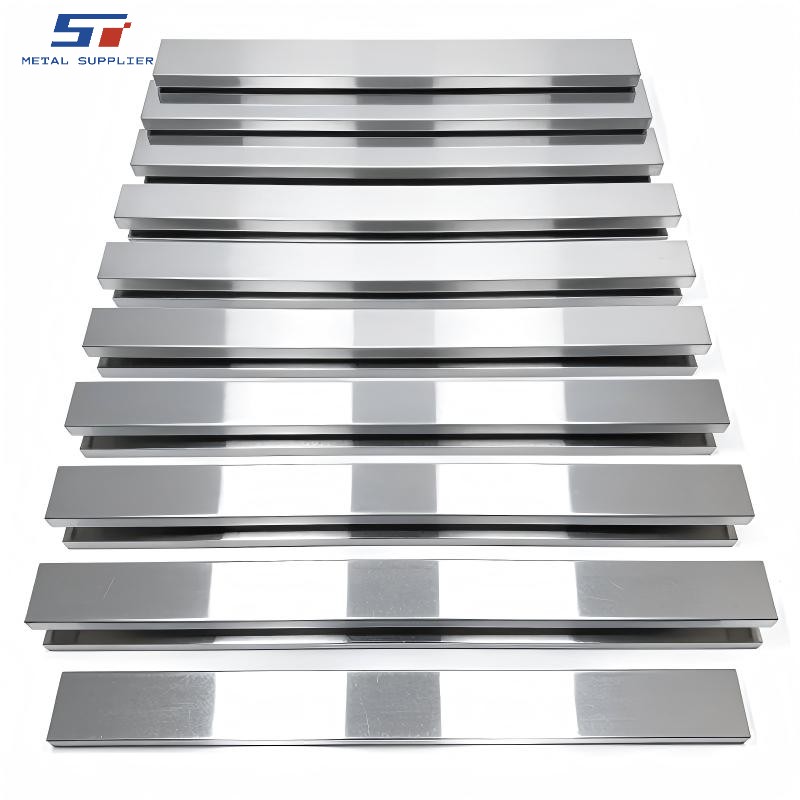
Unlike conventional structural components, conveyor guide rails directly influence product stability, transportation accuracy, and equipment operating efficiency. The guide rails ensure that bottles, cartons, containers, and packaged products remain accurately positioned while passing through filling, labeling, sealing, coding, weighing, and palletizing stations. Any dimensional inconsistency could result in product misalignment, conveyor jams, increased equipment downtime, or unnecessary maintenance.
The project required a complete one-stop manufacturing solution covering engineering review, laser cutting, CNC machining, precision bending, TIG welding, mechanical polishing, dimensional inspection, trial assembly, and export packaging. By integrating all manufacturing processes within one facility, Shengtao Metal successfully delivered ready-to-install guide rail assemblies that met the customer's demanding requirements for accuracy, durability, and production consistency.
Customer Requirements
The customer provided detailed 3D drawings covering twelve different guide rail configurations designed for various sections of the automated production line.
Each assembly included multiple fabricated components, including:
The production line operated continuously for up to twenty hours per day, requiring components capable of maintaining dimensional stability under long-term mechanical loading.
The customer established several critical technical requirements.
Guide rails needed smooth transition joints to prevent product impact during transportation.
Mounting interfaces had to maintain excellent positional accuracy to simplify installation on site.
Surface finishes needed to be smooth enough to avoid damaging product packaging while remaining easy to clean in food production environments.
The assemblies also needed excellent corrosion resistance because cleaning procedures involved regular exposure to moisture and industrial detergents.
Engineering Review and Process Optimization
Before production began, Shengtao Metal's engineering team conducted a comprehensive Design for Manufacturability (DFM) review together with the customer's project engineers.
Several opportunities for manufacturing optimization were identified.
The original guide rail design included numerous individually welded support brackets. Engineers proposed modularizing several connection points, reducing welding operations while improving dimensional repeatability.
The welding sequence was redesigned to balance thermal expansion throughout each assembly.
Additional locating features were introduced into the fabrication fixtures to improve assembly accuracy during welding.
Several mounting slots were optimized to provide greater installation flexibility without affecting the customer's equipment design.
These improvements reduced manufacturing complexity while enhancing production consistency.
Material Selection
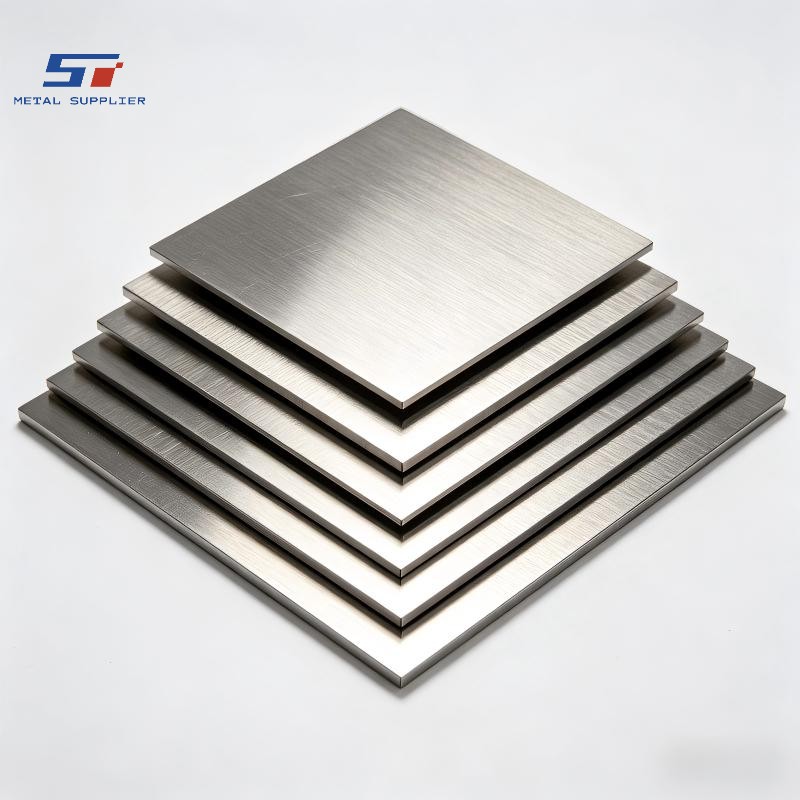
The customer selected ASTM A240 Type 304 stainless steel for all fabricated components.
The material offered several advantages for packaging equipment applications:
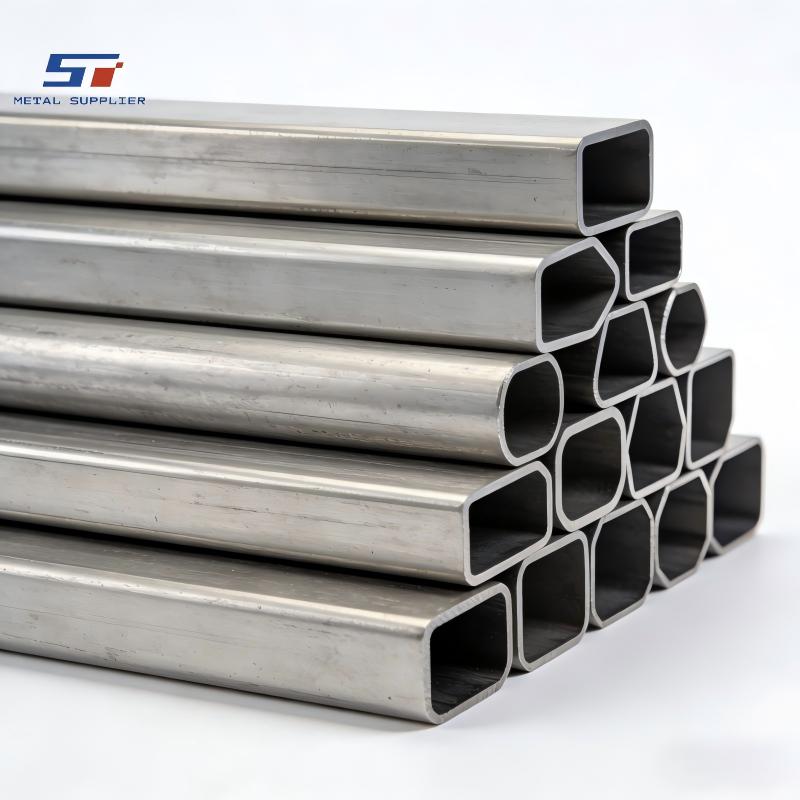
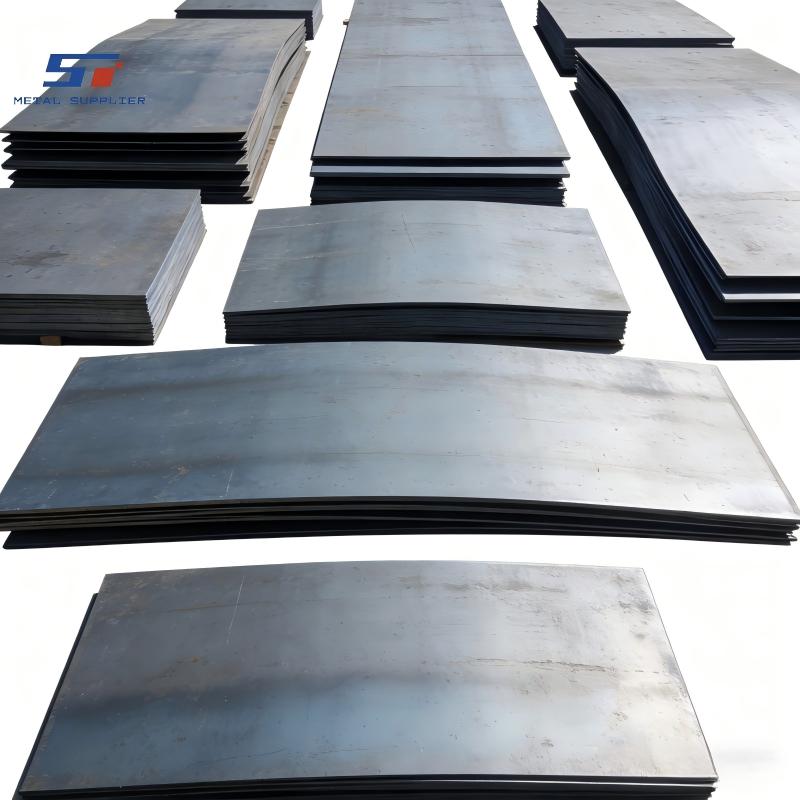
Raw materials included stainless steel sheet, rectangular tubing, round bars, and machined connection blocks.
Each incoming material batch underwent inspection covering:
Only qualified materials entered production.
Laser Cutting and Component Preparation
Production began with high-precision fiber laser cutting.
Laser cutting provided excellent dimensional consistency while minimizing heat-affected zones along cut edges.
Following cutting operations, every component underwent:
Components requiring threaded holes or precision mounting interfaces were transferred directly to CNC machining centers before fabrication.
This combination of laser cutting and precision machining significantly improved assembly accuracy during later production stages.
Precision Forming and Welding
After preparation, structural components entered the fabrication department.
CNC press brake equipment produced highly repeatable bends while maintaining tight angular tolerances.
Dedicated assembly fixtures were developed specifically for each guide rail configuration.
The fixtures ensured precise positioning throughout welding operations while minimizing dimensional variation.
Because guide rails remained visible after installation, welding quality was considered both a structural and aesthetic requirement.
Experienced welders utilized TIG welding procedures to produce clean, uniform welds with minimal spatter.
Balanced welding sequences reduced thermal distortion across long guide rail sections.
Following welding, assemblies underwent controlled cooling before dimensional inspection.
CNC Machining of Functional Interfaces
Several guide rail assemblies required precision-machined mounting features after welding.
Post-weld machining included:
Performing these operations after fabrication ensured all critical installation surfaces reflected the final geometry of the completed assembly.
This significantly improved installation accuracy while reducing adjustment work at the customer's production facility.
Mechanical Finishing
Surface quality represented an important project requirement because finished products would remain in continuous contact with the guide rails.
Following fabrication, all assemblies underwent mechanical finishing procedures.
Visible welds were blended smoothly with surrounding surfaces.
Brushed surface finishing produced a clean and consistent industrial appearance while maintaining easy-to-clean characteristics required by the customer's production environment.
Sharp edges and burrs were completely removed to eliminate the risk of damaging packaging materials during operation.
Every assembly received a comprehensive cleaning process before final inspection.
Quality Inspection
Quality control procedures were integrated into every stage of production.
Inspection activities included:
Critical inspection items included:
| Feature | Requirement |
|---|---|
| Overall Assembly Length | ±0.50 mm |
| Mounting Hole Position | ±0.10 mm |
| Rail Straightness | ≤0.30 mm/m |
| Parallelism Between Guide Rails | ±0.20 mm |
| Surface Finish | Uniform Brushed Finish |
Random guide rail assemblies were installed on a simulated conveyor section before shipment to verify installation compatibility and smooth product guidance.
Inspection reports accompanied every delivery.
Production Results
The project progressed from prototype approval into full production over a five-month manufacturing period.
Final production performance included:
After equipment installation, the customer reported smoother product transportation, fewer guide rail adjustments, and shorter commissioning times compared with previous production lines.
The modular guide rail design also simplified future maintenance and replacement.
Customer Benefits
The integrated manufacturing approach generated several measurable advantages.
Producing laser cutting, CNC machining, fabrication, welding, finishing, inspection, and trial assembly within one manufacturing facility significantly reduced communication delays between suppliers.
Precision fabrication improved installation accuracy, minimizing field modifications during equipment assembly.
The optimized welding process reduced structural distortion while post-weld machining ensured accurate mounting interfaces.
The customer also benefited from lower maintenance requirements due to improved dimensional consistency and better overall assembly quality.
As production expanded, standardized guide rail modules allowed the customer to simplify spare parts management and accelerate future production line upgrades.
Conclusion
This project demonstrates how precision fabrication and integrated manufacturing services contribute to the successful production of critical components for intelligent packaging equipment.
Through engineering collaboration, optimized fabrication processes, advanced CNC machining, controlled welding, and comprehensive quality assurance, Shengtao Metal delivered stainless steel conveyor guide rail assemblies that met demanding requirements for dimensional accuracy, durability, hygiene, and long-term operational reliability.
As automated packaging systems continue to evolve toward higher speeds and greater efficiency, precision-fabricated conveyor components will remain essential for ensuring stable product handling, reduced maintenance, and improved manufacturing productivity across modern industrial production lines.
Contact Shengtao Metal for Steel Product Solutions
If you are looking for reliable steel and metal product solutions, feel free to send us your inquiry.
Simply provide your specifications such as material grade, dimensions, quantity or application, and our team will respond quickly with professional support and a competitive quotation.
Email: stsalesman4@stmetal001.com



Request A Quote
Scan to Wechat/Whatsapp :