Project Overview and Application
The efficient management of industrial water resources requires highly specialized equipment, often organized into compact, modular units known as skid systems. This project involved the provision of a comprehensive 304 stainless steel tubing package for a large-scale water treatment skid destined for a municipal utility facility. The system was designed to perform advanced filtration and chemical dosing, necessitating a piping network that could withstand continuous operation in a humid, potentially corrosive environment while maintaining strict hygiene standards.
Water treatment skid systems are complex assemblies where space is at a premium. The piping and tubing must be precisely configured to fit within a steel frame, connecting pumps, filters, membranes, and control valves. In this application, the choice of 304 stainless steel was driven by its excellent resistance to oxidation and its ability to maintain the purity of the treated water. The project required not just standard components, but a tailored package of tubes, fittings, and connectors that would allow for rapid assembly and long-term reliability.
Technical Requirements and Material Selection
The primary technical challenge for this project was the requirement for high-precision dimensions and consistent material quality. The skid designer specified 304 stainless steel according to ASTM A269 standards, which covers seamless and welded austenitic stainless steel tubing for general service. Because the system involved high-pressure membrane filtration, the tubing had to be capable of handling internal pressures up to 600 PSI without risk of deformation or leakage at the joints.
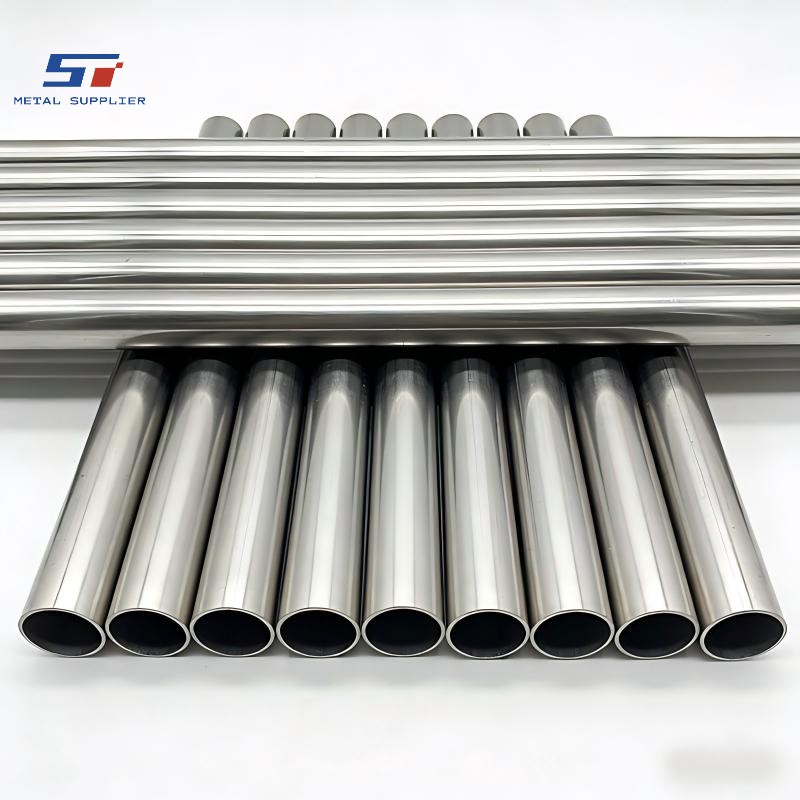
Corrosion resistance was another critical factor. While 304 stainless steel is highly effective in freshwater applications, the chemical dosing part of the skid involved exposure to dilute cleaning agents and pH-adjusting chemicals. The material had to be fully passivated to ensure the protective chromium oxide layer was uniform and robust. Furthermore, the internal surface of the tubing required a specific roughness average (Ra) to prevent the accumulation of bio-matter and to facilitate efficient Clean-in-Place (CIP) procedures. The procurement team emphasized the need for "bright annealed" tubing to achieve the desired internal smoothness and aesthetic appearance.
Custom Solution and Component Specification
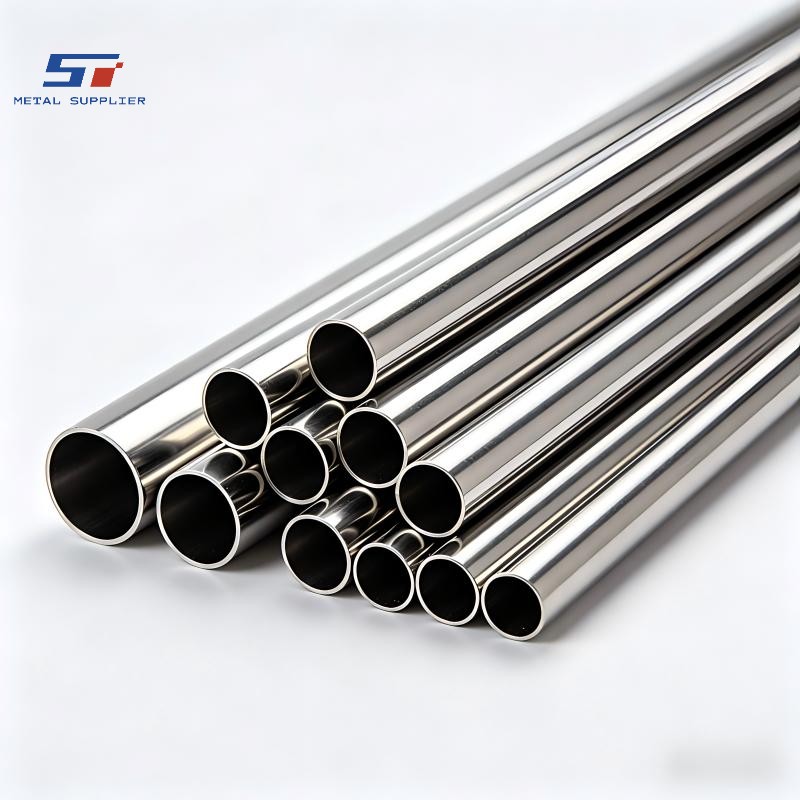
To meet these requirements, a custom tubing package was developed that moved beyond off-the-shelf sizes. The package included a variety of outside diameters ranging from 0.5 inches for instrumentation lines to 4 inches for the main process headers. The wall thicknesses were carefully matched to the pressure ratings of each sub-system, with heavier gauges used for the high-pressure pump discharge lines and lighter gauges for the gravity-fed return lines.
The solution also included a series of custom-length tubes with precision-cut ends, ready for orbital welding. Orbital welding is the preferred method for water treatment skids as it produces consistent, high-quality full-penetration welds with minimal internal protrusion. To support this, the tubing package was supplied with ends that were mechanically squared and deburred. Additionally, a selection of 304 stainless steel elbows, tees, and tri-clamp ferrules was included, all sourced from the same heat of steel where possible to ensure consistent welding characteristics and uniform corrosion resistance across the entire assembly.
Manufacturing and Material Processing
The production of the 304 stainless steel tubing followed a rigorous process starting with high-quality cold-rolled strips. For the welded tubing portions, an automated TIG (Tungsten Inert Gas) welding process was used, followed by a bead-reduction step to ensure the weld seam was virtually indistinguishable from the base metal. This is crucial in water treatment to prevent turbulence and potential points of localized corrosion.
After forming and welding, the tubing underwent a full solution annealing process. This involved heating the material to approximately 1040°C followed by rapid quenching. Annealing restores the austenitic structure of the 304 steel, which can be altered during the cold-working and welding stages, ensuring maximum corrosion resistance and ductility. Following annealing, the tubing was subjected to a chemical passivation process using a nitric acid solution. This removes any free iron from the surface and reinforces the passive layer, a vital step for equipment that will be in constant contact with water.
Project Coordination and Technical Support
Successful delivery of a custom package for a skid system requires close coordination between the material supplier and the skid manufacturer. In this project, technical support began during the design phase, providing advice on the optimal wall thicknesses for the intended pressure cycles and the compatibility of 304 steel with the specific chemicals used in the filtration process.
The coordination extended to the logistical planning of the delivery. Because the skid assembly was on a tight schedule, the tubing package was delivered in phases that matched the build sequence. For example, the frame-mounted headers were delivered first, followed by the smaller interconnecting lines. Each delivery was accompanied by a detailed packing list and a set of Mill Test Reports (MTRs) cross-referenced to the heat numbers etched on every tube and fitting. This level of documentation is essential for municipal projects where material traceability is a mandatory part of the final quality audit.
Quality Control and Verification
Quality control was integrated into every stage of the project. Every length of tubing was subjected to non-destructive testing, including eddy current testing to detect any surface or subsurface defects. For the larger diameter process tubes, a hydrostatic test was performed at 1.5 times the design pressure to verify the integrity of the longitudinal welds.
Dimensional accuracy was verified using calibrated calipers and gauges. In a skid system, even a minor deviation in the outside diameter or the wall thickness can lead to issues with automated welding equipment or the fitment of compression fittings. The quality team ensured that all tubing met the tight tolerances specified in ASTM A269. Furthermore, a percentage of the components underwent Positive Material Identification (PMI) testing using handheld XRF analyzers. This provided an additional layer of verification that the material was indeed 304 stainless steel with the correct chromium and nickel content.
Packaging and Protective Measures
Given the high-purity requirements of the water treatment application, packaging and protection were of paramount importance. After the final cleaning and passivation, the ends of all tubes and fittings were sealed with high-density polyethylene (HDPE) caps. This prevented the ingress of dust, moisture, and contaminants during transit and storage at the assembly site.
The tubing was bundled using padded straps and loaded into reinforced wooden crates to prevent bending or surface scratching. In many industrial environments, "carbon steel contamination" is a major risk; if stainless steel comes into contact with carbon steel tools or surfaces, it can pick up iron particles that later lead to rusting. To prevent this, the entire package was handled using dedicated stainless steel lifting equipment and stored in a designated "stainless-only" area of the warehouse. These protective measures ensured that the material arrived at the customer’s facility in pristine condition, ready for immediate installation.
Project Outcome and Reliability
The delivery of the custom 304 stainless steel tubing package enabled the skid manufacturer to complete the system on time and within the specified quality parameters. The precision-cut components and matched fittings reduced the time required for fit-up and welding, leading to a more efficient assembly process. Once commissioned, the water treatment skid performed to the design expectations, with the 304 stainless steel network providing a leak-free and corrosion-resistant conduit for the process fluids.
This project highlights the importance of a specialized approach to material supply in the water treatment industry. By providing a tailored solution that considered the unique pressures, chemical environment, and assembly requirements of a skid system, the project ensured the long-term durability of a critical piece of infrastructure. The success of the installation serves as a testament to the effectiveness of 304 stainless steel when correctly specified, processed, and handled for high-purity industrial applications.
Contact Shengtao Metal for Steel Product Solutions
If you are looking for reliable steel and metal product solutions, feel free to send us your inquiry.
Simply provide your specifications such as material grade, dimensions, quantity or application, and our team will respond quickly with professional support and a competitive quotation.
Email: stsalesman4@stmetal001.com



Request A Quote
Scan to Wechat/Whatsapp :