Project Overview and Application
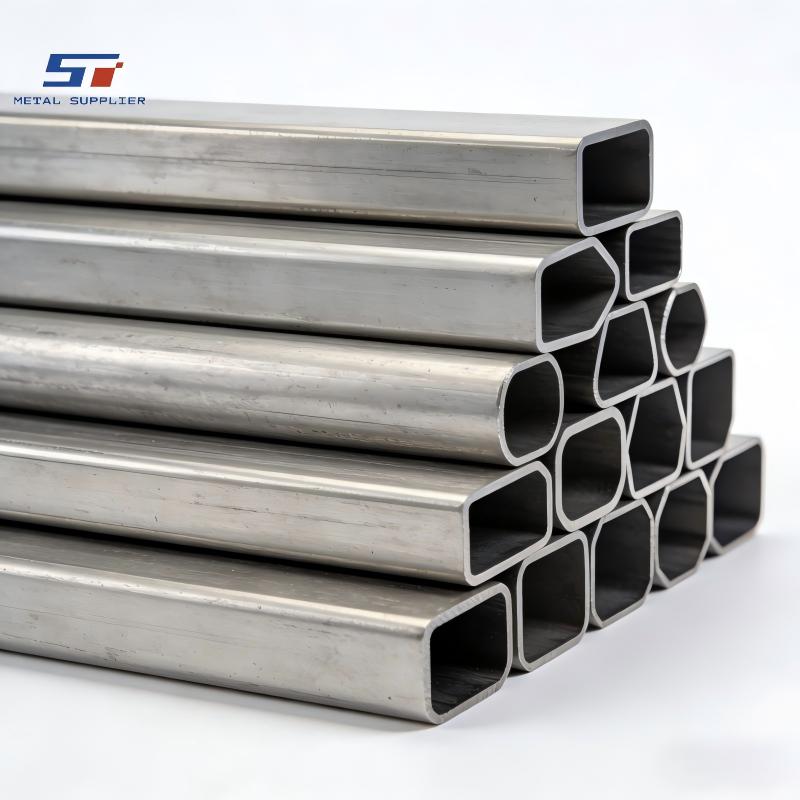
The deployment of custom rectangular tube frames for automated warehouse conveyor equipment is a fundamental component in modern logistics infrastructure. As e-commerce and global supply chains demand higher throughput, the structural backbone of these warehouses must evolve. Rectangular steel tubing is often the material of choice for these frames due to its high strength-to-weight ratio and its ability to resist torsional forces better than open profiles like C-channels or I-beams. The process of supplying these custom frames involves a meticulous approach to dimensional accuracy, material consistency, and cross-functional coordination.
Application Context and Automated Requirements
Automated warehouse environments are characterized by high-speed movement and the integration of sensitive electronic sensors. The conveyor systems that move parcels across vast facilities rely on frames that remain perfectly aligned over long distances. If a frame shifts or warps, the belt tracking can fail, or the automated sorting arms might miss their targets. Custom rectangular tube frames provide the necessary rigidity to support the drive motors, rollers, and belt assemblies. In this context, "custom" refers to the specific lengths, wall thicknesses, and hole patterns required to mount the various components of the conveyor system. The steel must also be able to withstand the vibrations inherent in 24/7 operations without developing fatigue cracks. The rise of multi-level mezzanine structures also places a premium on the weight of the frames, as the support structure must be strong enough to carry the dynamic loads of thousands of parcels moving simultaneously. This dynamic loading requires the frame material to possess a high degree of fatigue resistance to ensure structural longevity under millions of load cycles.
Structural Challenges and Design Specifications
The primary challenge in designing and supplying custom rectangular tube frames lies in the tolerance stack-up. For a conveyor line that might span several kilometers, a small deviation in the straightness of an individual tube can lead to significant alignment issues during final assembly. Specifications for these frames usually demand cold-formed or hot-finished rectangular hollow sections (RHS) with high dimensional stability. The wall thickness must be sufficient to allow for threading or the insertion of heavy-duty fasteners, yet the overall weight must be managed to facilitate installation on mezzanine levels. Furthermore, the internal and external radiuses of the tube corners must be consistent to ensure that mounting brackets fit securely every time. If the corner radius is too large, the mounting bolts may not seat correctly, leading to loose connections that can exacerbate vibration and noise. Precision in the external dimensions is also vital for the integration of automated guided vehicles (AGVs) that may interact with the conveyor at specific pick-up points.
Material Selection and Specification Process
The selection process for the seamless alloy steel tubes starts with a thorough review of the boiler’s operating parameters, including peak pressure and temperature profiles. Standard carbon steel is often insufficient for the superheater or reheater sections, leading to the selection of ferritic alloy steels. These materials are chosen for their lower coefficient of thermal expansion compared to austenitic stainless steels, which helps minimize thermal fatigue at the points where the tubes are welded to carbon steel headers. The specification process also involves determining the required heat treatment—typically normalizing and tempering—to ensure a stable microstructure. This microstructure is essential for long-term service life, as it dictates how the steel will behave after thousands of hours of operation at temperatures exceeding 500 degrees Celsius. For instance, T91 is often preferred for its superior strength-to-weight ratio, allowing for thinner tube walls and improved heat transfer efficiency, although it requires much more stringent control during the welding and post-weld heat treatment phases.
Material Selection and Mechanical Properties
Material selection for conveyor frames typically favors structural carbon steel grades that offer a balance of weldability and strength. The choice between cold-formed and hot-finished rectangular tubes depends on the specific loading requirements of the warehouse. Cold-formed tubes often provide a better surface finish and tighter dimensional tolerances, which is beneficial for the aesthetics and precision of high-tech facilities. However, hot-finished tubes may be preferred for sections subjected to extreme loads due to their lack of residual stresses. The mechanical properties must ensure that the frame can support the dynamic weight of the moving cargo, which can range from light envelopes to heavy pallets, without exceeding the elastic limit of the steel. In regions with high seismic activity, the material must also exhibit specific elongation properties to ensure that the structure can absorb energy without catastrophic failure.
Precision Machining and Customization Steps
The production of custom rectangular tube frames involves several specialized steps beyond the initial rolling of the steel. Once the raw tubing is produced, it must be cut to precise lengths using high-accuracy sawing or CNC laser-cutting equipment. Many automated conveyor designs require complex hole patterns for the installation of roller axles, cable management trays, and sensor mounts. Coordinating the placement of these holes is a critical phase of production, as it requires a high degree of synchronization between the design drawings and the machining centers. Laser cutting is often preferred for this task as it can produce highly accurate holes and cutouts in a single pass, ensuring that the alignment of the roller axles is consistent across the entire length of the conveyor section. Any error at this stage would render the frame useless during site assembly, as manual corrections in the field are both time-consuming and prone to inaccuracy.
Production Coordination and Workflow Management
Managing the production of thousands of individual frame components requires a robust coordination system. Each section of the conveyor must be tracked through the various stages of cutting, drilling, and finishing. The workflow is designed to ensure that each section of the frame is processed in a sequence that maintains the straightness of the tube, even after the removal of material through cutting or drilling. For larger projects, the coordination team must also manage the integration of various accessory components, such as mounting feet and cross-bracing. This requires a high degree of collaboration between the steel supplier and the conveyor system designers to ensure that all parts fit together as intended. The production schedule is often tied to the warehouse construction timeline, necessitating a "just-in-time" approach to manufacturing to minimize the need for on-site storage.
Quality Checkpoints and Precision Testing
Quality control for custom rectangular tube frames is centered on three main pillars: dimensional accuracy, weld integrity, and surface finish. Every batch of frames undergoes a rigorous inspection process where the length, width, and squareness of the tubes are measured against the project specifications. Laser measurement tools are often used to verify the straightness of the sections over their entire span, as even a minor bow can disrupt the alignment of high-speed sorting sensors. If the frames involve welded sub-assemblies, such as support legs or cross-bracing, the welds are inspected for penetration and consistency to ensure they can withstand the constant vibration of the warehouse environment. Non-destructive testing, such as magnetic particle inspection or liquid penetrant testing, may be used on critical load-bearing welds to detect surface-breaking defects. Furthermore, the thickness of the powder coating or galvanized layer is verified to ensure long-term corrosion resistance in potentially humid warehouse zones. Finally, the surface is checked for any burrs or sharp edges that could damage the conveyor belts or pose a safety risk to warehouse personnel during maintenance. A final pre-assembly test may be conducted on a sample section to ensure that the rollers and drive components mount correctly without mechanical interference.
Packaging, Logistics, and Delivery Coordination
The final stage of the project is the logistics of moving the custom rectangular tube frames from the production facility to the warehouse construction site. Because these frames can be bulky and long, packaging must be robust to prevent bending or surface damage during transport. The frames are typically bundled using protective spacers and heavy-duty strapping to ensure they remain secure on the truck or in the shipping container. For large-scale warehouse projects, delivery is often scheduled in phases to match the installation sequence. This "just-in-time" delivery approach prevents the site from becoming cluttered with materials that aren't yet needed and ensures that the frames are moved directly from the transport vehicle to the installation point. Clear labeling on each bundle helps the site crew quickly identify where each section belongs in the overall conveyor layout, facilitating a smooth and efficient assembly process. Each shipment is also accompanied by a detailed packing list that includes the specific part numbers and their corresponding locations within the warehouse grid.
Contact Shengtao Metal for Steel Product Solutions
If you are looking for reliable steel and metal product solutions, feel free to send us your inquiry.
Simply provide your specifications such as material grade, dimensions, quantity or application, and our team will respond quickly with professional support and a competitive quotation.
Email: stsalesman4@stmetal001.com



Request A Quote
Scan to Wechat/Whatsapp :